Categories
Blog Branding Business Consulting Tips And More Information

GROWING YOUR BUSINESS WITH BRANDING Part 2

Branding is not just about having a cool logo or a catchy tagline. It’s about creating an identity that resonates with your audience, telling a story that reflects your values, and establishing a presence that sets you apart from the competition.

Why Branding Matters

Branding gives your business a personality. It’s the difference between a faceless company and a brand that people can connect with on an emotional level. A strong brand builds trust, and trust is a key factor in customer loyalty and retention. When your clients feel that they know and trust your brand, they’re more likely to choose your services over those of your competitors.

Personal Experience with Branding

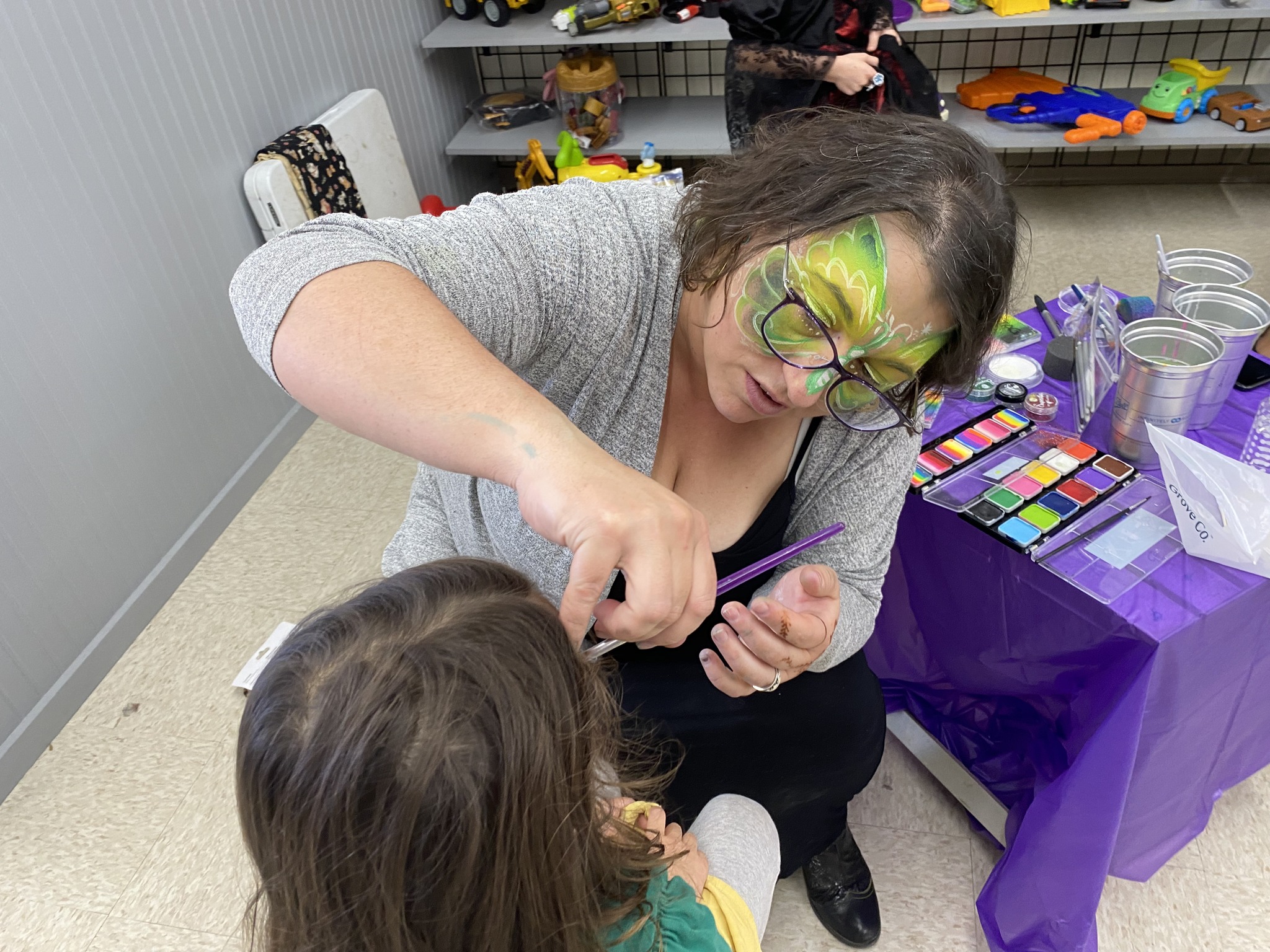
From my own experience, I’ve seen how powerful branding can be. When I was working as a face painter, it wasn’t just about the product. It was about the story behind the product, the brand that I built around it. This brand identity made my services stand out and helped me connect with my customers on a deeper level. I wasn’t just a face painter, I often dressed up and painted my own face. I played games with the kids and told stories. My brand was whimsical, imaginative and fun. Everything about my booth- my outfit, the backdrops on my canopy, my signs- told the story. I also had made myself a logo, business cards and a website that reflected my brand.

Branding in the Gig Economy

In today’s gig economy, where freelancers and small business owners are competing for attention, branding is more important than ever. It’s not enough to be good at what you do; you need to be able to communicate why you’re the best choice. Your brand is the promise you make to your clients, and it’s what sets you apart in a crowded market.

Practical Steps for Building Your Brand

  1. Define Your Mission and Values: Your brand should reflect what you stand for and what you’re passionate about. Take the time to define your mission and values, and make sure they’re evident in everything you do.
  2. Know Your Audience: Understanding your target market is crucial. Who are they? What do they need? What are their pain points? The better you understand your audience, the more effectively you can tailor your brand to meet their needs.
  3. Consistent Visual Identity: Consistency is key in branding. Your logo, color scheme, fonts, and other visual elements should be consistent across all platforms and materials. This helps to create a cohesive and recognizable brand image.
  4. Create Quality Content: Whether it’s blog posts, social media updates, or videos, the content you create should reflect your brand’s voice and values. High-quality, valuable content helps to establish you as an authority in your field and builds trust with your audience.
  5. Engage with Your Audience: Building a brand is not a one-way street. Engage with your audience, listen to their feedback, and make them feel valued. Social media is a great platform for this, allowing you to interact with your clients in real time.

I invite you to join me in navigating the challenges of owning a business, building strong brands, and creating meaningful connections with our clients. Remember, your brand is not just a logo or a tagline; it’s the heart and soul of your business. Let’s make it something truly remarkable.

Next month, we’ll dive deeper into the nuts and bolts of branding, exploring specific strategies and tactics that you can use to elevate your brand and attract more clients. Whether you’re just starting out or looking to rebrand, there’s something for everyone. Stay tuned, and let’s build something amazing together!

Categories
Blog Business Consulting Holistic Management Tips And More Information

Growing Your Business with Branding

“Find a job you enjoy doing, and you will never have to work a day in your life.” -Mark Twain

It is my belief that we are all talented. We each love something and are so passionate about that something, that we can get lost in it for hours without noticing the time go by. 

Maybe these are our callings, or our hobbies. Sometimes we have many of these passions and sometimes just one. 

These tasks call to us. Unavoidable. Insatiable.

I have the curse of having many callings. For several years I passionately made decals. For another stretch of time, I did embroidery. Yet another set of years were dedicated to crochet. More recently, I spent many nights sewing masks until I could barely see straight.

I have had many, but two passions stand true through all of this: branding and design. I can’t help myself. 

I never simply made decals, I created a brand around my artful decals complete with a name and a logo. I couldn’t find patterns for the kind of blankets I wanted to crochet, so I made my own geek-themed blanket patterns and branded them before I put them up on pattern sharing sites and groups.

A friend of mine once told me that not every idea or hobby has to be turned into a business. And of course, she is right. But when my hobbies turn into walls full of scratchboard portraits or cupboards full of homemade soap and household cleaning products it only makes sense to start selling it.  If I am selling it, I should put my name in it. It can’t be my name, so I may as well make a cool name. If it has a name it may as well have a logo. If it has a logo. . .

Yeah, I may have a problem.

I see brands everywhere. I guess when you look at the connections between all the past times my real hobby becomes obvious: branding businesses.

I have studied business since I was in middle school when I began babysitting for extra cash. I was drawing my logo, consisting of my initials, on all my drawings, notebooks and whatever else I could find. Soon, friends asked me to make their initials into logos too. I spent many afternoons as a teen at the library researching how to start a tee-shirt store. 

I have done enough studying on branding and marketing that many friends have come to me for advice on how to make their business stand out. I’m no lawyer or CPA and would never give the kind of advice that these professionals can give when someone is starting a new business; but, if you have a small 1–3-person operation trying to find ways to getting your name out there, build your brand and reputation, marketing and the like, I’m your girl!

Why is any of this important?

At the end of 2019, Intuit commissioned a Gallup survey of the “gig economy”—the population of freelancers and self-employed individuals and their means of making a living, a population that has grown a lot in the last decade. This report shows that 28% of the workforce is made up of gig-workers and 14% of that group is made up of people that are 100% self-employed. Most of these workers stated that their reason to be self-employed stemmed out of a need to be their own boss and have greater autonomy. The number of freelancers in the workforce continues to steadily climb as we become more able to do work remotely. You can find the complete report for this survey here.

With the huge number of freelancers, self-employed and gig-workers in the workforce there is also a great possibility that a portion of our readers are a part of this percentage. While the term “freelancer” often conjures up the image of a desk-jockey (at least it does for me), the term includes many service-industry workers. I grew up with my parents running a two-person operation: my dad doing home maintenance and my mom running his office. My mom also ran a house cleaning operation for many years. They had many friends who ran similar small businesses, painters, drywallers, repairmen, mechanics, etc.

The number one complaint any of these people had? Finding work! In fact, this problem of feast or famine—either too much work or long stretches of searching for work—was not just an isolated issue found in the small group of self-employed individuals we knew.  A survey by the freelance marketplace “Freelancermap.com” showed that finding clients was the #1 complaint of their freelancers.  This leads to a feeling of instability and the idea that you need to be on the clock always.

Self-employment is not for the faint of heart.

This month, I am introducing my new business column. It is my goal to speak to all my friends that are self-employed and bring some of my knowledge to you. We will discuss marketing, brand personality, websites and even (one of my least favorite things) social media marketing (bleh). We will have interviews with local businesspeople and learn what tools they have used to help them succeed. Most of all, I hope to help you grow and succeed!

In the competitive world of self-employment, you need to find a way to stand out in the crowd as the best solution to your target-market’s problem. If you can brand yourself and your business in a way that does this, you will set your business up for much steadier growth. How do you do this? Step 1: Branding.

Next month we will go over some of the basics of branding and what it can do to help you bring in work. Whether you are a plumber or a programmer, branding can help you build trust with your target market and that trust can lead to more business for you.

Categories
Blog Business Consulting Holistic Management Tips And More Information

6 Ways I Avoid Burnout

2020 was going to be my year for my freelance graphic design business. I had been taking marketing classes, learning to build websites, and networking. I gained a consistent client; I was receiving many inquiries and projects. I even rented a desk at my local coworking space. It was all working out!

Unfortunately, I was wrong. As with almost everyone else in the world, COVID-19 sent me spinning totally out of control. I had clients who could not pay for finished work. Many even dropped me. Leads disappeared as their businesses lost their footing. By the end of the spring, I was back to where I began.

But suddenly having so much down time felt strange. I started helping friends repair and build their dreams, sewing masks for local medical workers and friends, founded Mind Travelers, and then in the fall, started homeschooling my two teenagers.

I was working on some project or another from the moment I woke up to when I went to bed—which was very late. And yet, while I spent many late nights working on this or that, I would wake up early. I didn’t stop, and when I did, I felt useless, empty, and hopeless.

Several times during the year, I had to stop working due to a sharp pain radiating from my right hand up to the base of my skull. I was unable to bend or rotate my wrist and ended up wearing a wrist brace to stabilize it. It often caused me to break down in tears. I could barely read a book or cook dinner in this state.

All my hard work had earned me “Cervical Radiculopathy”. The tension in my neck was causing muscles to spasm, pulling my neck out of alignment and pinching the nerve causing my hand to be weak and hurt. If I wanted this pain to go away, I needed to start making some changes in my life. Thus, started my long journey towards healing.

Even during lockdown, I was experiencing physical and mental burnout.

The work of healing my body has meant working on many other aspects of my life. In the end, a lot of what I had gotten used to as a normal needed to be changed. My time spent working on projects needed to be in shorter spurts, causing me to consider each one more seriously. I had to add many stretches and exercises throughout the day. I had to reduce my screen time which I replaced with more exercise. I have been spending more quality time with my kids and taking little moments for myself. I still have a lot of healing to do, and it is a slow process that involves both my body and my mind.

One of the most helpful and inspiring practices I have completed during this journey was creating my personal mission statement. Having this personal statement means I know what truly matters to me. When a project comes up that sounds amazing and interesting, I can compare it to my personal mission statement. Will I get closer to my personal goals? Will this do me harm? Will this take me away from what truly matters to me? I am interested in so many things that almost any opportunity sounds like a good one to me if I don’t consider it closely. I have had to learn to take on only those things that I need to accomplish, and that I can accomplish.

It is my mission to create meaningful relationships with the people that matter to me, building close communities and helping bring positive change

My personal mission statement.

My new burnout avoidance strategy includes the following:

  1. Set specific hours and place for work, stick to them and don’t work outside those hours.

One of the biggest problems people experience while working from home is the lack of delineation between their work and home lives. It is so easy if a client texts to just sit down and get to work—even if we are trying to cook dinner or get our children to bed. Being “on the clock” all the time really doesn’t help you accomplish more. Clients that demand you help them “right now” even late in the evening are probably not worth stressing over.

  1. Know your priorities.

I encourage you to write your own personal mission statement to see what matters most to you. While many interesting, exciting and socially important opportunities will continue to rise, you cannot be a part of all of them. Having a written and thought-out personal mission statement will help you choose what is most important to you. Armed with this knowledge you can begin to weed out the tasks that don’t align with your needs.

  1. Be organized and schedule activities for work, exercise, family time, self-care and household chores/errands.

This goes hand-in-hand with knowing your priorities. Put time aside for these important parts of your life first, and schedule everything else around that.  Sometimes this is hard to do.

Working for others means that we have to schedule important parts of our lives around our work. But this is part of taking care of ourselves and our families. Time outside of work is precious and should be prioritized as such. There is absolutely no shame in working 40 hours a week and then using all the rest of your time taking care of yourself and your family. If this is satisfying, then allow yourself to enjoy that.

If you can’t reduce the amount of work you do, or cut back on projects, then I suggest seeking assistance. Maybe older children or your spouse can help with dinner and/or chores. Maybe that means having take-out more often. Maybe that means hiring someone to clean. Ask for help wherever and whenever you can.

  1. Be kind to yourself and listen to your body and inner self.

When I got to the point where my body was screaming at me (the pain in my hand) I had already been ignoring the smaller cries for help for years. Had I listened when many other problems had come up in my health, my scary and painful trouble with my wrist could have been completely avoided. Spending time stretching, exercising, meditating, eating right and going out for walks is incredibly important. Working from 9-5 in one straight shot without taking regular breaks or even a lunch (something I know many of us do) is so unhealthy. Whether cleaning houses or working at the computer or any other work, we need to find ways to add in movement and fresh air.

  1. Spend less time doing tasks that steal your time and energy.

More and more this year I have personally found myself depressed, stressed and anxious after spending hours a day scrolling through social media. It sounds like a lot of time, but I could bet that if anyone were to actually time their social media use, they would find that what they think is a small part of their day is actually a huge problem. After spending all that time seeing friends argue, people jamming their opinions down your throat, and the constant flow of filtered selfies a person can become drained. And yet, the moment we have a second of boredom, we open the app back up.

This has always been a known problem for me, but this year is the straw that broke this camel’s back. I have not closed any accounts but have removed social media apps from my phone. This has helped me immensely. If you don’t think it’s a problem, keep track of your social media time. You may be surprised. If you don’t think you can give it up, try backing off for a day or a week or setting limits to your social media time. I promise it’s worth it.

  1. Meditation and breathing exercises.

Woo-woo, right? Wrong. In fact, according to Andrew Newberg, M.D., neurologist and author of “How God Changes Your Brain” the acts of meditation, gratitude and prayer physically change your brain, building new neuropathways and helping you recover from stress. Through scientific study, meditation was proven to reduce stress, slow the aging process and enhance physical and emotional health. The studies compiled in this book show meditation to be an immensely beneficial practice. I have found in my meditation practice that I feel more grounded, clearer headed and able to take on difficult situations when I regularly meditate for at least 5 minutes a day.

Burnout is an increasingly common issue. These stories, and how I am handling my trouble is of course anecdotal. Take what you want, leave the rest.

As always, the advice and stories I have written are not meant to diagnose or offer treatment. If you or someone you know is experiencing burnout or any other physical or mental illness, I encourage you to seek the advice of your doctor.